


The UK Tiling Industry in 2026: Innovation, Adaptation, and the Rise of Expressive Surfaces
Posted by Pure Adhesion Ltd on 10th Apr 2026
The UK tiling industry in 2026 sits at an interesting crossroads. It is a mature, highly competitive market shaped by imports, evolving design preferences, and economic pressures—but also one undergoing a quiet transformation driven by innovation, sustainability, and changing lifestyles.
This year, tiling is no longer just about function. It has become a central design feature in homes and commercial spaces alike, blending performance with personality.
Market Overview: Steady Growth in a Challenging Climate
The UK floor and wall tile market is projected to grow modestly from 2026 onwards, with annual growth rates of around 2–3%. While demand remains tied closely to housebuilding, renovation activity, and commercial construction, the sector is also navigating headwinds such as inflation, labour shortages, and subdued consumer spending.
Major retailers like Topps Tiles have responded by restructuring operations, including store closures to maintain profitability amid softer DIY demand.
Despite these pressures, long-term fundamentals remain positive. The UK’s ageing housing stock and continued focus on upgrading interiors are sustaining demand for tiling products across both residential and commercial sectors.
Material Trends: Porcelain Dominance and Natural Revival
Porcelain continues to dominate the UK market, accounting for most of the tile usage thanks to its durability, low maintenance, and ability to convincingly mimic natural materials.
However, 2026 is also seeing a strong resurgence of natural materials. Designers and homeowners are increasingly drawn to:
- Natural stone (limestone, travertine, flagstone)
- Terracotta finishes
- Handcrafted surfaces
This shift reflects a broader desire for authenticity and tactility. Rather than polished perfection, consumers are embracing variation, imperfection, and materials that age gracefully.
Key Design Trends Defining 2026
- Warm, Earthy Colour Palettes
Cool greys are fading out, replaced by warmer tones such as clay, beige, and soft greens. These colours create more inviting, lived-in spaces and align with the wider “wellness interior” movement.
- Texture Takes Centre Stage
Flat, uniform tiles are giving way to textured and fluted designs. These surfaces add depth and visual interest, particularly in bathrooms and feature walls.
- Large-Format Tiles
Large-format porcelain slabs continue to grow in popularity, especially in open-plan spaces. Fewer grout lines create a seamless, modern aesthetic while improving practicality.
- Biophilic and Natural Design
Biophilic design—bringing elements of nature indoors—is influencing tile choices, from stone-effect finishes to organic shapes and colours.
- Indoor–Outdoor Continuity
Tiles designed for both interior and exterior use are increasingly popular, helping to create fluid transitions between living spaces and gardens.
- Statement Patterns and Heritage Styles
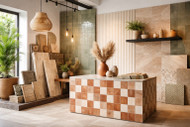
While minimalism is declining, expressive styles are rising. Checkerboard layouts, mosaics, and handcrafted patterns are being reinterpreted for modern interiors.
Product Innovation: Technology Meets Craft
One of the most significant developments in 2026 is the blending of advanced manufacturing with artisanal aesthetics.
Digital Printing and “Natural Effect” Tiles
Advancements in digital inkjet technology allow porcelain tiles to replicate stone, wood, and even fabric textures with remarkable realism. This has accelerated the shift away from traditional materials while retaining their visual appeal.
Sustainable and Recycled Materials
Sustainability is becoming a key differentiator. Manufacturers are increasingly producing tiles using recycled content and energy-efficient processes, responding to both regulatory pressures and consumer demand.
Technical Brick Slips and Hybrid Products
Innovative products like technical brick slips and warm concrete-effect tiles are gaining traction, particularly in commercial and urban residential projects.
Handmade and Artisan Finishes
At the premium end of the market, there is renewed interest in handmade tiles—particularly Zellige and hand-painted designs—which offer individuality and craftsmanship.
Industry Challenges: Skills and Supply Chains
The UK tiling industry continues to face a shortage of skilled tilers, which is becoming more pronounced as construction targets increase.
Additionally, the UK remains heavily reliant on imported tiles, with a significant proportion sourced from Europe and Asia. This exposes the market to currency fluctuations, shipping costs, and geopolitical factors.
To address these issues, there is a growing emphasis on training, apprenticeships, and improving domestic production capabilities.
Looking Ahead: A More Personal, Sustainable Future
If one theme defines the UK tiling industry in 2026, it is the shift toward personalisation and authenticity. Tiles are no longer just background materials—they are design statements.
At the same time, sustainability, durability, and practicality remain non-negotiable. The most successful products are those that balance aesthetic appeal with long-term performance.
As the market continues to evolve, the intersection of technology, craftsmanship, and environmental responsibility will shape the next generation of tiling solutions—ensuring the industry remains both resilient and creatively vibrant.

